Patio Furniture That Lasts 25 Years: Materials & Care
Table of Contents
- What Makes Patio Furniture Last 25 Years
- Solid Wood vs. Plastic Outdoor Furniture: Which Wins for Longevity
- Best Outdoor Furniture Materials for Longevity
- Climate Considerations for Outdoor Furniture Durability
- Outdoor Furniture Maintenance Tips for Durability
- Lifecycle Cost Analysis: Why Quality Matters
- Signs of Structural Failure and When to Repair vs. Replace
- Conclusion
Last Updated: August 28, 2026
What Makes Patio Furniture Last 25 Years
Patio furniture that lasts 25 years results from material selection, construction quality, and consistent maintenance. Most homeowners replace outdoor furniture every 3-5 years because they prioritize price over durability (peer-reviewed research). The difference between furniture that fails in two seasons and pieces that remain structurally sound for two decades comes down to three factors: the core material's weather resistance, frame and fastener quality, and protection from seasonal extremes.
At Backyard Comfort CO, we've built our entire outdoor furniture line around this principle. We use solid wood, HDPE poly, powder-coated aluminum, and wrought iron, specifically chosen for their ability to withstand decades of outdoor exposure. Understanding which materials work best for your specific environment and what maintenance schedule keeps them performing is the real challenge.
Solid Wood vs. Plastic Outdoor Furniture: Which Wins for Longevity
The choice between solid wood and plastic outdoor furniture is where most decisions go wrong. People assume plastic is always better because it won't rot, but that ignores UV degradation, thermal expansion, and structural integrity over time. Solid wood, when properly treated and maintained, often outlasts plastic by a significant margin.
Teak Wood: The Gold Standard
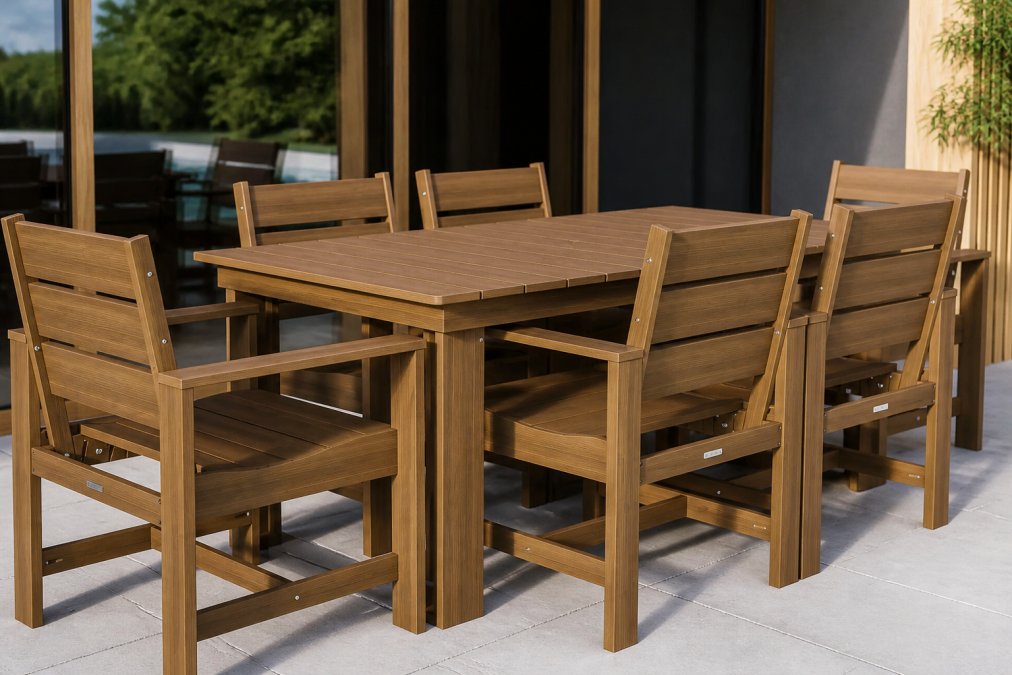
Teak is the benchmark for outdoor wood furniture longevity. This tropical hardwood contains natural oils that resist rot, insects, and weather damage. Unlike pressure-treated pine or cedar, teak doesn't require staining or sealing to survive decades outdoors. The wood actually improves with age, developing a silvery-gray patina that many homeowners prefer to the original honey color.
Teak needs annual cleaning with a soft brush and mild soap to prevent mildew and algae buildup. Every 2-3 years, apply a teak oil or sealant to restore the original color and protect against UV damage. With proper maintenance, a teak set from Backyard Comfort CO can easily function for 30+ years.
HDPE Poly: Low-Maintenance Durability
HDPE (high-density polyethylene) poly furniture offers minimal maintenance with acceptable durability. HDPE is made from recycled plastic, molded to look like wood grain, and won't rot, splinter, or crack under normal conditions. It resists UV damage better than most plastics, though prolonged sun exposure will eventually fade the color.
The trade-off is structural longevity. HDPE has lower tensile strength than solid wood, meaning it's more prone to sagging or warping under heavy loads over time. Reinforced aluminum or steel frames extend the lifespan significantly. Backyard Comfort CO's 7-Piece Outdoor HDPE Dining Set comes with a 20-year warranty on the frame, reflecting realistic expectations. Maintenance is straightforward: soap and water, occasionally. No sealants, stains, or oils required.

Best Outdoor Furniture Materials for Longevity
Beyond wood and plastic, the real durability champions are metal frames, specifically powder-coated aluminum and wrought iron. These materials form the backbone of furniture that truly lasts 25 years or longer.
Powder-Coated Aluminum and Wrought Iron
Powder coating is the difference between metal furniture that lasts five years and metal furniture that lasts 25 (astm.org). This industrial finish, applied electrostatically and heat-cured, creates a protective layer that resists rust, UV damage, and corrosion far better than paint or bare metal. When applied correctly to aluminum or wrought iron, powder coating prevents moisture from reaching the underlying material.
Aluminum is lighter and naturally resistant to corrosion. Wrought iron is heavier, stronger, and more elegant. For longevity, wrought iron edges out aluminum because it has greater structural integrity under stress. However, wrought iron requires flawless powder coating; any chip or scratch exposes bare metal to rust.
Backyard Comfort CO's louvered pergolas use powder-coated aluminum frames rated to withstand 72 mph winds. The reinforced steel louvers are also powder-coated, creating a system designed for decades of outdoor exposure.
Cast Aluminum vs. Wrought Iron Durability
Cast aluminum is created by pouring molten aluminum into molds, resulting in pieces with complex shapes and integrated reinforcement. Wrought iron is forged through heating and hammering, creating a denser, stronger material.
For patio furniture that lasts 25 years, wrought iron has the advantage in pure structural strength. However, cast aluminum with proper powder coating is nearly as durable and offers weight advantages for movable furniture. The real differentiator is the quality of the powder coating and fastener hardware. Stainless steel or powder-coated fasteners are essential; galvanized or bare steel fasteners will rust within a few years, compromising structural integrity.
Synthetic Wicker and HDPE Performance
Synthetic wicker, typically made from HDPE or PVC wrapped around aluminum frames, mimics the look of natural rattan while offering better weather resistance. The HDPE or PVC weave can last 15-20 years without cracking or fraying if the frame is solid. However, water can seep into connection points between the weave and frame, and thermal expansion can eventually cause separation.
Synthetic wicker works best in dry climates or for furniture that's covered during off-season storage. For year-round outdoor use in humid regions, solid wood or metal frames with minimal weave are more durable choices.
Climate Considerations for Outdoor Furniture Durability
Your regional climate is the single most important factor determining how long patio furniture lasts. High-humidity climates accelerate rot in wood and promote mildew and corrosion in metal. Coastal environments add salt spray, which is extremely corrosive to unprotected metal. Desert climates create intense UV exposure and extreme temperature swings, causing thermal expansion that stresses joints and fasteners. Cold climates with freeze-thaw cycles can crack wood and loosen metal connections.
For humid climates, HDPE poly or powder-coated aluminum with stainless steel fasteners is the safest choice. Teak can work if you're committed to annual maintenance and oiling. For coastal environments, wrought iron with flawless powder coating or stainless steel hardware is essential. In desert climates, any material works, but UV-protective covers or pergola shade become important for extending finish life.
Backyard Comfort CO's louvered pergolas are engineered for diverse climates. The powder-coated aluminum frame and reinforced steel louvers with integrated drainage systems handle high humidity, coastal salt spray, and intense sun exposure.
Outdoor Furniture Maintenance Tips for Durability
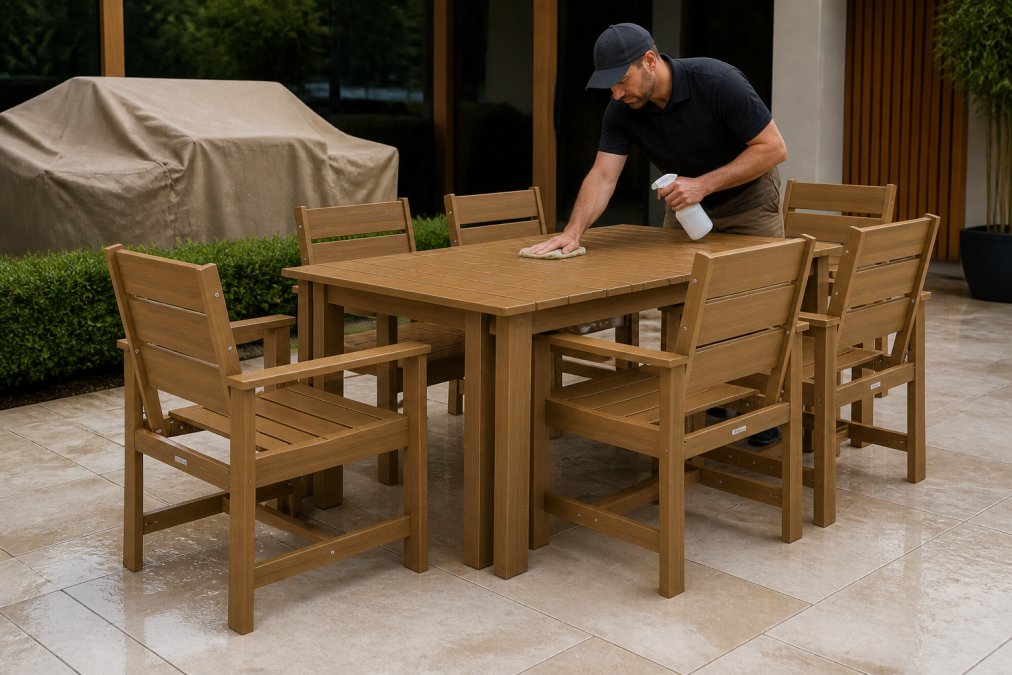
The difference between furniture that lasts 10 years and furniture that lasts 25 years is almost always maintenance. A consistent care routine prevents small problems from becoming structural failures.
Seasonal Storage and Protective Covers
Seasonal storage is the single most effective maintenance strategy. Bringing furniture indoors or into covered storage during off-season months eliminates months of weather exposure. In cold climates, this prevents freeze-thaw cycles that crack wood and loosen fasteners. In humid climates, it reduces mold and mildew growth.
If storage isn't possible, protective covers are the next best option. High-quality outdoor furniture covers, made from breathable, UV-resistant material, protect from rain, sun, and debris while allowing air circulation to prevent moisture buildup. Even a simple cover left on during heavy rain or snow seasons makes a measurable difference in durability.
Hardware and Fastener Longevity
Hardware failures are the leading cause of structural failure in outdoor furniture (peer-reviewed research). Bolts, screws, and rivets corrode, loosen, or break, causing seats to wobble or armrests to separate. Check all bolts and screws twice yearly, spring and fall. Tighten any that have loosened due to thermal expansion or vibration. Replace any corroded fasteners immediately with stainless steel equivalents.
For wood furniture, use stainless steel or brass fasteners exclusively. Galvanized fasteners will rust within a few years in outdoor conditions. For metal frames, stainless steel fasteners are non-negotiable in coastal environments. Riveted connections are stronger than bolted connections for permanent installations like pergolas. Backyard Comfort CO's louvered pergolas use riveted joints in critical load-bearing areas, combined with corrosion-proof hardware throughout.
Lifecycle Cost Analysis: Why Quality Matters
The upfront cost of quality patio furniture is higher, but the total cost of ownership over 25 years tells a different story. A cheap set that lasts 3-4 years costs significantly more per year than a quality set that lasts 25 years. Over two decades, the cheaper option costs substantially more in total spending, not counting the time and hassle of replacement cycles.
Quality also affects resale value. A well-maintained teak or wrought iron set can be sold for 40-60% of its original cost after 10-15 years. A worn HDPE set has minimal resale value. If you ever move or redesign your patio, durable furniture retains value in ways cheap alternatives don't.
The Backyard Comfort CO 7-Piece Outdoor HDPE Dining Set includes a 20-year warranty on the frame, reflecting the durability expectation. The louvered pergolas are engineered for 25+ years of use. These are investments that genuinely pay off over time through reduced replacement cycles and maintenance costs.
Signs of Structural Failure and When to Repair vs. Replace
Even well-maintained furniture eventually shows wear. Knowing when to repair versus replace prevents both premature disposal of salvageable pieces and the frustration of trying to maintain furniture beyond its useful life.
Early warning signs of structural problems include loose or wobbly seats, visible rust or corrosion on metal frames, soft spots or visible rot in wood, and separation of joints or welds. Loose fasteners, minor rust, and surface cracks are repair territory. Structural failures, bent frames, separated joints, or deep rot typically signal replacement time.
For wood furniture, rot is the defining failure. If rot penetrates more than a quarter-inch deep, structural integrity is compromised. Small surface rot can be sanded and refinished, but deep rot requires replacement of the affected component or the entire piece. HDPE poly doesn't rot or rust, but it can crack under stress or warp under extreme heat. The 20-year warranty on Backyard Comfort CO's HDPE dining sets reflects realistic durability expectations. After 20 years of regular use, structural components may begin to fail, making replacement more economical than continued repair.
Conclusion
Patio furniture that lasts 25 years is achievable with the right material choices and maintenance commitment. Teak wood offers premium aesthetics and exceptional durability with annual care. HDPE poly provides low-maintenance performance for 20+ years. Powder-coated aluminum and wrought iron create structural frameworks that withstand decades of weather exposure. The key is matching your material to your climate and committing to a realistic maintenance schedule.
Backyard Comfort CO designs outdoor furniture specifically for long-term durability. Our HDPE dining sets include 20-year warranties on frames, and our louvered pergolas feature powder-coated aluminum construction rated for 72 mph winds. With free shipping on most orders and a straightforward 30-day return policy, investing in patio furniture built to last has never been easier. Explore our collection and build an outdoor living space designed for decades of comfort.
| Material | Lifespan | Maintenance | Best For | Climate Suitability |
|---|---|---|---|---|
| Teak Wood | 25-30+ years | Annual cleaning, periodic oiling | Premium aesthetics, traditional style | Moderate to humid |
| HDPE Poly | 20-25 years | Soap and water only | Families, high-traffic areas, low maintenance | All climates |
| Powder-Coated Aluminum | 20-25 years | Annual inspection, occasional cleaning | Modern design, lightweight, pergolas | Coastal, desert, humid |
| Wrought Iron | 25-30+ years | Annual inspection, touch-up coating | Classic elegance, maximum strength | All climates |
| Synthetic Wicker | 15-20 years | Regular cleaning, seasonal storage | Aesthetic appeal, moderate durability | Dry climates preferred |
Frequently Asked Questions
What type of patio furniture is most durable for 25 years?
HDPE poly, teak wood, and powder-coated aluminum frame furniture offer the best longevity. HDPE resists UV degradation and moisture without maintenance. Teak naturally resists rot and insects due to its oil content. Powder-coated aluminum prevents corrosion and handles coastal environments well. All three can realistically last 25 years with proper care.
Can you leave patio furniture outside all year long?
Yes, but material choice matters. HDPE poly and powder-coated aluminum withstand year-round exposure without damage. Wrought iron and cast aluminum need protection from high-humidity climates. Teak can stay outside year-round but benefits from seasonal cleaning and occasional oil treatment. Synthetic wicker holds up well outdoors but lasts longer with winter storage in harsh climates. Always use protective covers during extreme weather.
How do you maintain patio furniture to ensure it lasts decades?
Clean furniture 2-3 times per year with mild soap and water. For teak, apply teak oil annually to maintain color and water resistance. Check fasteners and hardware quarterly for corrosion, especially in coastal environments. Use breathable protective covers during off-season storage. Inspect frame joints and structural integrity each spring. Store cushions indoors during winter. HDPE and powder-coated aluminum need minimal maintenance beyond cleaning.
Is HDPE poly lumber better than wood for outdoor furniture longevity?
Both excel at durability but serve different needs. HDPE poly requires zero maintenance, resists UV degradation and moisture, and never splinters or rots. Teak wood offers natural beauty, ages gracefully, and lasts 25+ years with minimal care. HDPE is ideal for high-traffic areas and humid climates. Teak works better if you value authentic wood aesthetics and don't mind occasional refinishing. Neither option compromises longevity.
What should I look for in a manufacturer's warranty for outdoor furniture?
Look for warranties covering frame and structural components for at least 10-20 years. Check if coverage includes rust, rot, and UV degradation. Verify the warranty applies to year-round outdoor use, not just seasonal storage. Confirm whether maintenance requirements (like teak oiling) affect coverage. A 20-year frame warranty on HDPE furniture indicates confidence in longevity. Read fine print about weather-related damage and coastal environment exclusions.
This article was written using GrandRanker