How to Protect Patio Furniture This Winter
Table of Contents
- Clean Your Furniture Before Anything Else
- Winterizing Wood Patio Furniture the Right Way
- Best Patio Furniture Covers for Winter
- Storing Outdoor Cushions for Winter
- When to Bring Furniture Indoors vs. Leave It Outside
- Small Space and Climate-Specific Storage Solutions
- Protect Patio Furniture: A Pre-Winter Checklist
- Conclusion
Last Updated: August 22, 2026
Clean Your Furniture Before Anything Else
Most homeowners skip straight to covering or storing their pieces, then wonder why mildew shows up by February. The real culprit is trapped moisture and debris sealed under a cover, which does more damage than a hard frost ever could.
Start with a full debris removal pass. Clear off leaves, dirt, bird droppings, and organic buildup from every surface, including the underside of tabletops and chair legs. Then wash each piece according to its material:
- All furniture types: Mild dish soap mixed with warm water works for a first pass. Rinse thoroughly.
- Wood: Avoid soaking the grain. Use a damp cloth, not a pressure washer.
- Metal: Check for rust spots before washing. Treat any oxidation before sealing.
- Wicker and rattan: Use a soft brush to get into the weave. Let it air dry completely, at least 24 hours in direct sunlight if possible.
The most important rule: let everything air dry completely before covering or storing. Covering damp furniture creates a sealed environment that accelerates mildew growth and wood rot.
Winterizing Wood Patio Furniture the Right Way
Wood furniture demands the most attention before winter. According to the Forest Products Laboratory at the USDA, wood exposed to repeated freeze-thaw cycles without a protective finish absorbs and releases moisture unevenly, causing surface checking and joint failure. The fix is straightforward: seal before the temperature drops.
Teak and Cedar: Seal or Leave Natural?
Teak contains natural oils that make it highly resistant to moisture, insects, and rot. Many teak owners prefer to leave it unsealed and let it develop a silver-gray patina naturally. If you prefer to maintain the original warm honey tone, apply a teak-specific oil before winter storage. Avoid generic wood sealants on teak, as they can trap moisture rather than repel it.
Cedar is naturally resistant but more porous than teak. A water-repellent spray or penetrating oil finish applied before winter will prevent the grain from absorbing seasonal moisture. Light sanding with fine-grit sandpaper before applying any finish helps the product penetrate evenly.
Both species benefit from being stored off direct ground contact on rubber feet or wooden blocks to prevent moisture wicking from concrete or soil.
Protecting Metal and Wicker Furniture
Metal furniture faces corrosion threats. Aluminum is naturally rust-resistant, making it the lowest-maintenance metal option. Wrought iron and steel need more attention.
Before storing metal pieces, inspect every weld and joint for rust spots. Sand any oxidized areas down to bare metal, then apply a rust-inhibiting primer followed by a touch-up coat of exterior paint. A coat of car wax over painted metal surfaces adds UV protection and moisture resistance heading into winter.
Wicker and rattan are the most vulnerable materials in cold, wet climates. Natural rattan can crack and split when exposed to freeze-thaw cycles. If your wicker is natural rather than synthetic resin, bringing it indoors is the only reliable winterization strategy. Synthetic resin wicker handles inclement weather better but still benefits from a breathable cover to block debris.
Best Patio Furniture Covers for Winter
A quality cover is the most practical winterization tool for furniture that stays outside. The difference between a cover that works and one that doesn't comes down to three things: material weight, ventilation design, and how it secures in wind.
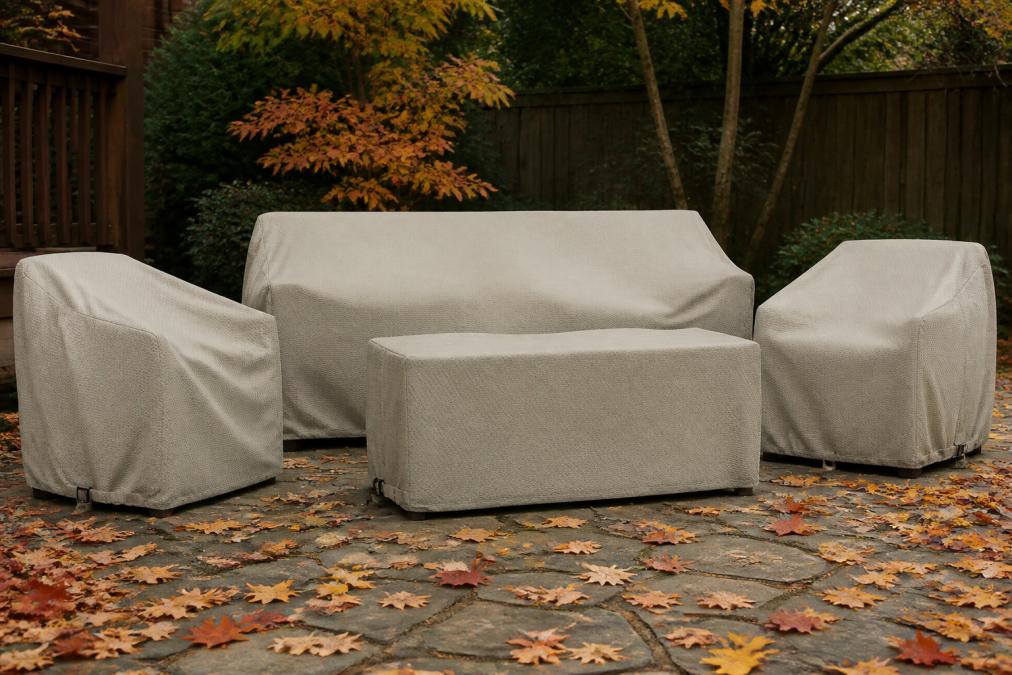
Look for covers made from 600D Oxford fabric or heavier. Heavy-duty covers with mesh air vents on both sides are essential, ventilation prevents condensation buildup inside the cover, which is the main cause of mildew on covered furniture.
The Backyard Comfort CO Patio Large Beige Furniture Cover is built from 600D Oxford fabric with mesh air vents on both sides to reduce condensation and prevent wind lofting. At 98 in. L x 78 in. W x 32 in. H, it fits most standard patio sets. For complete set coverage, the 5-Piece Patio Furniture Cover Set covers a full 7-person seating group with water-repellent, UV-resistant covers for sofas, loveseats, chairs, and a coffee table.


Covers vs. Shrink Wrap: Which Works Better?
Shrink wrap creates a fully sealed barrier but eliminates ventilation entirely. Without airflow, any residual moisture has nowhere to go, and mildew develops in that sealed environment. It also requires a heat gun to apply and removal in spring often means cutting through the wrap and disposing of it.
For most homeowners, a well-fitted, breathable cover with windproof straps outperforms shrink wrap. Shrink wrap makes sense for long-term storage in unheated structures or for furniture that won't be accessed until spring.
| Feature | Breathable Cover | Shrink Wrap |
|---|---|---|
| Ventilation | Yes (mesh vents) | None |
| Mildew risk | Low | Higher without ventilation |
| Ease of removal | Easy | Requires cutting |
| Reusability | Multiple seasons | Single use |
| Best for | Most residential use | Long-term sealed storage |
Storing Outdoor Cushions for Winter
Most outdoor cushion fabric, even fabric rated as mildew-resistant, will develop mold if left compressed and damp under a cover through several months of winter. The foam fill absorbs moisture and becomes a breeding ground for spores.
The right approach:
- Brush off debris and spot-clean stains with mild soap and water.
- Allow cushions to air dry fully, standing them on edge to let both sides dry evenly.
- Store in a dry location: a storage shed, garage, or climate-controlled space.
- Use breathable storage bags or a vented storage bin. Sealed plastic bags trap moisture.
- Stack cushions flat or on edge; avoid folding, which can permanently crease fabric.
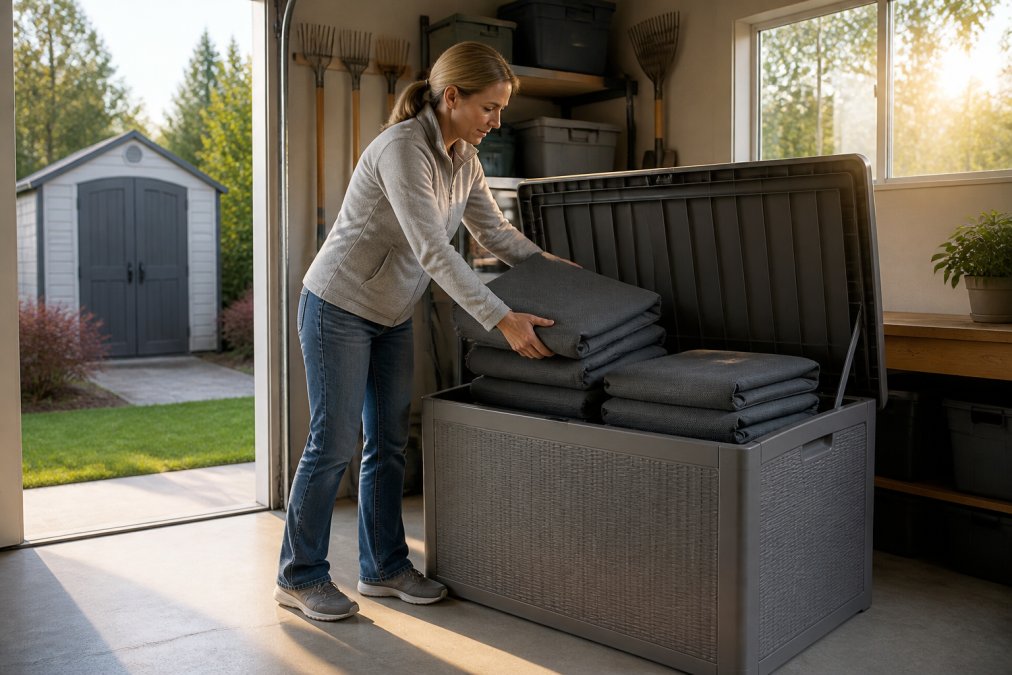
If indoor storage space is limited, a dedicated outdoor storage bench kept in a sheltered spot is a workable alternative.
When to Bring Furniture Indoors vs. Leave It Outside
The decision depends on your material, climate, and available storage space.
Bring indoors:
- Natural wicker, rattan, or cane furniture (these crack and split in freeze-thaw conditions)
- Furniture with cushions that can't be separated from the frame
- Pieces with painted or lacquered finishes that haven't been recently sealed
- Any furniture in regions that experience sustained temperatures below 20°F
Leave outside with covers:
- Aluminum furniture (rust-resistant, handles cold well)
- Properly sealed teak or cedar
- Powder-coated metal with no rust damage
- Synthetic resin wicker
According to the University of Minnesota Extension's guidance on outdoor wood care, wood furniture left outside through freeze-thaw cycles without proper sealing can show surface checking within a single season. Even furniture rated for outdoor year-round use benefits from being covered or stored during months it's not in active use.
Small Space and Climate-Specific Storage Solutions
Urban homeowners and those with small patios face real challenges. Here are practical solutions:
For small spaces:
- Vertical storage: Stackable chairs, folding tables, and nesting side tables reduce floor footprint dramatically.
- Outdoor storage benches: A weather-resistant storage bench doubles as seating and holds cushions and accessories.
- Under-bed storage bags: For apartment dwellers, cushions can be stored in vacuum-seal bags under beds or in closets.
- Shared storage: Check whether your building has available shared storage space before renting a unit.
Climate-specific considerations:
| Climate Type | Primary Risk | Best Strategy |
|---|---|---|
| Cold and dry (Mountain West) | Wood cracking from low humidity | Seal wood, store cushions indoors |
| Cold and wet (Pacific Northwest) | Mildew, corrosion | Breathable covers + indoor cushion storage |
| Hot and humid (Gulf Coast) | Mold, UV degradation | UV-resistant covers, ventilated storage |
| Variable (Midwest, Northeast) | Freeze-thaw cycles | Full indoor storage for natural materials |
As noted in the National Weather Service's climate data resources, freeze-thaw cycle frequency varies significantly by region. The Northeast and Midwest see the most cycles per winter, which is precisely where proper sealing and covered storage matter most for wood and metal furniture.
Protect Patio Furniture: A Pre-Winter Checklist
Use this checklist each fall to protect patio furniture before the first hard freeze. Running through it takes less than two hours for most setups and prevents damage that shortens furniture life by years.
Cleaning and Prep
- Remove all debris, leaves, and organic buildup from all surfaces
- Wash each piece with mild soap and warm water appropriate to the material
- Inspect all joints, welds, and hardware for damage or rust
- Allow all pieces to air dry completely (minimum 24 hours)
Material-Specific Treatment
- Sand and re-seal or oil wood furniture (teak oil for teak, water-repellent spray for cedar)
- Sand rust spots on metal and apply rust-inhibiting primer and touch-up paint
- Apply paste wax to painted metal surfaces
- Inspect wicker and rattan for cracks; bring natural materials indoors
Cushion and Fabric Care
- Spot-clean all cushion fabric and allow to dry fully
- Store cushions in breathable bags or a vented storage bin
- Keep cushions off the ground and away from standing water
Covering and Storage
- Select covers sized to fit each piece with elastic hems or windproof straps
- Confirm covers have mesh air vents to prevent condensation
- Secure all covers with straps to prevent wind displacement
- Bring natural wicker, rattan, and unsealed wood indoors if possible
Final Check
- Confirm no furniture is resting directly on soil or concrete without a barrier
- Verify storage shed or garage items are elevated off the floor
- Note any pieces that need replacement or repair before next season
Winter is the season that separates furniture built to last from furniture built to be replaced. Proper winterization protects your investment and keeps your outdoor space ready to use the moment warm weather returns. Backyard Comfort CO's weather-ready outdoor furniture is built with solid wood construction and weather-resistant design to handle every season, but even the best pieces last longer with the right care. Explore the Backyard Comfort CO patio furniture cover collection and get your outdoor space ready for winter the right way.
Frequently Asked Questions
Should I cover my patio furniture in the winter?
Yes, covering your patio furniture through winter is one of the most effective ways to prevent damage. A quality waterproof cover blocks moisture buildup, UV exposure, and debris accumulation. Look for covers made from breathable fabric with mesh air vents, these reduce condensation that can cause mildew and corrosion. Without a cover, even weather-resistant materials like teak and rust-resistant metal can degrade faster when exposed to repeated freeze-thaw cycles and inclement weather.
How do you store outdoor furniture in the winter if you have no space?
Limited space doesn't mean leaving furniture unprotected. Stack chairs vertically and use heavy-duty furniture covers to keep grouped pieces together on the patio. Store cushions in vacuum-seal bags to cut their volume significantly, then slide them under beds or into closets. A small storage shed or deck box can hold cushions and smaller accessories. For truly tight spaces, folding or stackable furniture designs make winter storage far more manageable without needing a garage or basement.
Does wood patio furniture need to be brought inside for winter?
Not necessarily. Dense hardwoods like teak and cedar are built to stay outdoors year-round when properly maintained. Before winter, sand any rough spots, apply a wood sealant or water-repellent spray, and cover the pieces with a breathable, waterproof cover. In climates with heavy snowfall or prolonged freezing temperatures, moving wood furniture into a garage or storage shed adds meaningful protection. Lighter or unfinished wood pieces benefit most from indoor winter storage to prevent cracking and warping.
How do you prevent rust on outdoor furniture during winter?
Start by cleaning metal furniture thoroughly and drying it completely before winter arrives, moisture trapped under a cover accelerates corrosion. Apply a rust-inhibiting spray or wax to exposed metal surfaces, paying attention to joints and welds where water collects. Use a heavy-duty waterproof cover with windproof straps to keep moisture out. Aluminum furniture is naturally rust-resistant, but steel and iron pieces need this treatment every season to maintain their finish and structural integrity through inclement weather.
This article was written using GrandRanker