Outdoor Living Space Ideas for Cold Weather Climates
Table of Contents
- 1. Fire Pits and Outdoor Fireplaces: The Anchor of Any Cold-Weather Outdoor Living Space
- 2. Best Outdoor Heaters for Patios in Freezing Temperatures
- 3. Patio Enclosure Ideas for Winter Wind and Snow Protection
- 4. Weather-Resistant Furniture Materials That Survive the Cold
- 5. Winterizing Outdoor Furniture Tips to Protect Your Investment
- 6. Outdoor Lighting, Textiles, and Decor for a Cozy Winter Atmosphere
- 7. Energy Efficiency and Sustainability in Your Cold-Weather Outdoor Living Space
- Conclusion
Last Updated: August 23, 2026
The biggest mistake most homeowners make when setting up an outdoor living space for cold weather is treating it like a summer space with a blanket thrown on top. A genuinely functional winter patio requires intentional planning across heating, shelter, materials, and lighting. This guide covers the seven most impactful upgrades you can make to your outdoor living space, with practical advice on what works, what doesn't, and how to avoid wasting money on solutions that fail after one hard winter.
| Upgrade | Primary Benefit | Best For | Difficulty |
|---|---|---|---|
| Fire pit or fire table | Radiant heat + focal point | All patio sizes | Low |
| Outdoor patio heater | Wide area space heating | Large open spaces | Low |
| Pergola with panels | Wind and snow protection | Exposed patios | Medium |
| Weather-resistant furniture | Durability, low maintenance | All climates | Low |
| Furniture covers + storage | Protects investment off-season | All furniture types | Low |
| Ambient lighting + textiles | Cozy atmosphere, warmth | All spaces | Low |
| Energy-efficient heating | Lower operating costs | Frequent users | Medium |
1. Fire Pits and Outdoor Fireplaces: The Anchor of Any Cold-Weather Outdoor Living Space
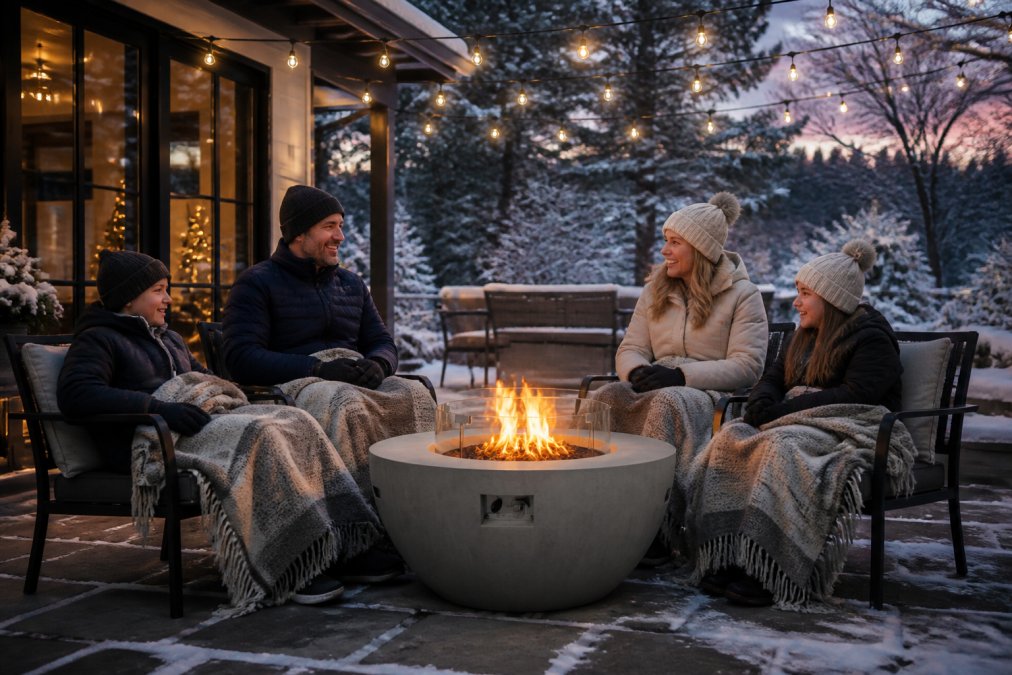
A fire pit is the single most transformative upgrade you can make to a cold-weather outdoor living space. It creates a focal point, delivers radiant heat where people are actually sitting, and extends usable outdoor time well into freezing temperatures.


Choosing Between a Fire Table, Chiminea, and Fire Bowl
Fire tables function as both a heat source and a surface for drinks or decor. The 56" x 32" Cast Concrete Fire Table from Backyard Comfort CO delivers 45,000 BTU through a CSA-certified stainless steel burner with electric ignition and auto safety shut-off. The 60" x 27" version in natural gas suits homeowners who want a fixed connection without managing propane tanks.

Chimineas direct heat upward in a focused column, making them better for smaller patios. The 70 Inch Chiminea with Pellet Hopper uses an integrated pellet hopper for extended burn times.
Fire bowls are the most portable option. The 39-inch Propane Concrete Fire Pit delivers 50,000 BTU with a smoke-free H-shaped double-layer burner and includes a rain cover.
Safety Protocols for Winter Heating Appliances
Cold-weather fire pit use introduces specific risks:
- Clear the area of snow and ice before igniting. Moisture under a fire table can create steam pressure in some base materials.
- Maintain 3-foot clearance from combustible materials including furniture cushions, rugs, and overhead structures. The Consumer Product Safety Commission guidelines on outdoor fire pit safety provide specific clearance recommendations.
- Never operate propane fire pits in enclosed spaces without ventilation. Retractable enclosures and pergola side panels must remain partially open when a gas fire is running.
- Inspect the gas line and connections before first use each season. Cold temperatures cause rubber components to contract and crack.
- Use CSA-certified equipment only. Both cast concrete fire tables carry CSA certification, verifying the burner and ignition system meet North American safety standards.
2. Best Outdoor Heaters for Patios in Freezing Temperatures
Patio heaters fill a different role than fire pits. Where a fire pit heats people immediately around it, a standalone outdoor heater warms a broader area, making it ideal for larger patios or spread-out seating arrangements.
The best outdoor heaters for patios in freezing temperatures fall into three categories: propane tower heaters, electric infrared heaters, and natural gas heaters plumbed to a permanent line. Propane tower heaters are the most common choice because they require no installation and can be repositioned. Electric infrared heaters are the most energy-efficient option for covered or semi-enclosed spaces because they heat objects and people directly rather than warming the air, which means less heat loss in windy conditions. Natural gas heaters make sense for homeowners who already have a gas line on the patio, though installation cost is higher.
For most homeowners, the most practical approach combines a fire pit table with one or two supplemental infrared heaters positioned to cover the seating area perimeter. This layered approach handles even hard winters without requiring a full patio enclosure.
3. Patio Enclosure Ideas for Winter Wind and Snow Protection
Wind is the real enemy of a cold-weather outdoor living space. A 35°F evening with no wind feels manageable. Add a 15 mph wind and the same temperature becomes genuinely unpleasant. Enclosure structures solve this problem structurally rather than asking your heater to compensate.
Pergolas with Retractable Covers and Side Panels
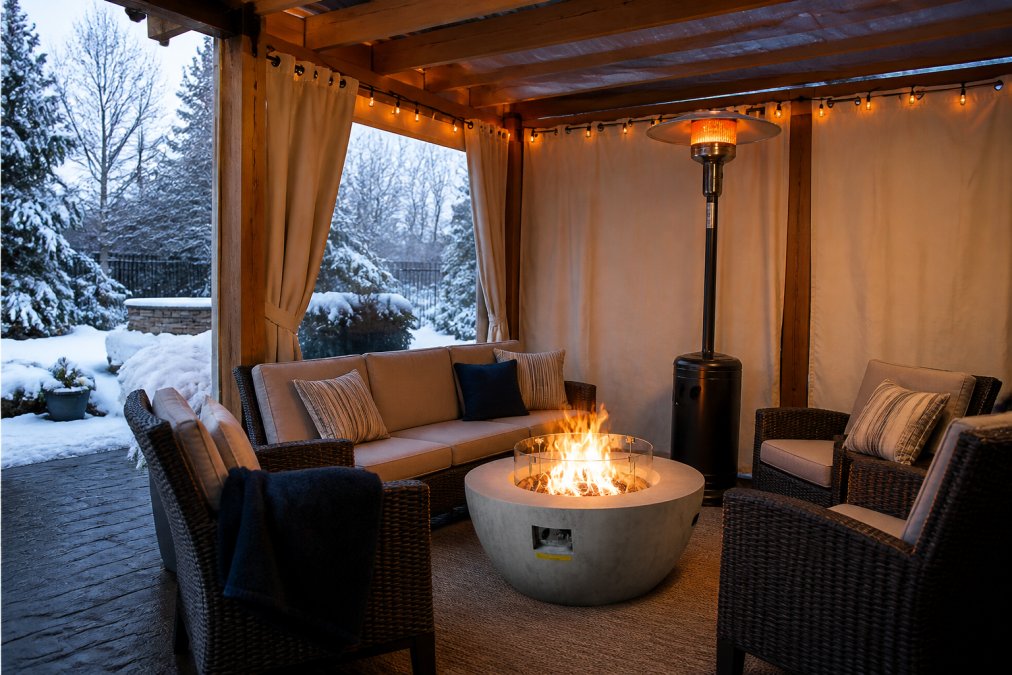
A pergola with a retractable cover is the most versatile cold-weather structure. In mild weather, the cover retracts and the space feels open. In cold or wet weather, the cover closes and side panels drop to block wind. The side panels matter more than the roof cover for thermal comfort. Look for pergola systems that include drop curtains or track-mounted polycarbonate panels that seal the sides.
Snow load is a real structural concern in regions with significant accumulation. A retractable cover can be opened during heavy snowfall to prevent structural stress. Fixed polycarbonate or glass roofs need to be rated for the snow loads typical in your region. The International Residential Code guidance on snow load requirements provides the baseline calculations most local building departments use.
Budget-Friendly DIY Enclosure Options
For homeowners who want wind protection without a full pergola installation, consider outdoor curtain panels on tension rods or cable systems using heavy canvas or sunbrella-weight fabric, clear vinyl drop curtains that block wind while maintaining sightlines, stacked firewood or dense evergreen plantings on the windward side, or portable privacy screens made from weather-resistant materials that can be repositioned based on wind direction.
DIY enclosure options can be tested and adjusted without major financial commitment. Start with curtains, see how much protection they provide, and upgrade to a pergola structure once you know exactly what the space needs.
4. Weather-Resistant Furniture Materials That Survive the Cold
Choosing the wrong furniture material is the most expensive mistake in cold-weather patio design. Many homeowners discover this after one winter cycle splits a wood frame or causes a metal frame to rust through its finish.
Powder-coated steel with PE wicker is the standard for all-weather patio furniture. The steel frame provides structural rigidity; the powder coating prevents rust; the hand-woven PE wicker resists UV degradation and moisture without cracking. Backyard Comfort CO's wicker furniture sets use this construction because it handles freeze-thaw cycles without the joint failures common in cheaper aluminum frames.
Cast concrete performs exceptionally in cold climates. It doesn't rust, doesn't crack under thermal cycling, and develops a natural patina over time. Teak and solid hardwoods are cold-weather capable with proper maintenance and last decades when properly sealed.
Materials to avoid in cold climates: untreated softwood (which absorbs moisture and splits), natural rattan wicker (which deteriorates rapidly), thin-wall aluminum frames (which flex under snow load and develop stress cracks), and mesh sling fabric (which holds moisture and develops mildew through winter).
5. Winterizing Outdoor Furniture Tips to Protect Your Investment
The right winterization approach depends on the material and whether the piece will remain outside or go into storage.
For furniture staying outside year-round:
- Clean all surfaces with a mild soap solution before the first hard freeze.
- Apply a UV-protective sealant to wood surfaces in late fall.
- Use fitted outdoor furniture covers made from breathable material.
- Elevate furniture legs off concrete or stone surfaces using furniture feet or rubber pads.
- Remove cushions and store them indoors.
For furniture going into seasonal storage:
- Disassemble modular pieces to reduce storage footprint.
- Stack chairs seat-to-seat with a layer of moving blankets between frames.
- Store in a dry space with some air circulation.
- Tag hardware bags and keep them with the furniture for spring setup.
Fire pit tables need specific winter care. Drain any water from the burner housing, disconnect and store the propane tank separately in a ventilated area, and cover the burner assembly with the included canvas cover. Lava rocks should be removed and stored dry because saturated rocks can crack when heated after freezing.
6. Outdoor Lighting, Textiles, and Decor for a Cozy Winter Atmosphere
The aesthetic dimension of a cold-weather outdoor living space matters more than most practical guides acknowledge. A space that's warm but visually stark doesn't get used. Cozy atmosphere comes from layering light and texture.
Ambient Lighting That Works in Cold Conditions
Outdoor lighting for winter use requires fixtures rated for cold temperatures. Many LED string lights are rated for temperatures as low as -40°F, but the controller boxes and dimmer switches are often rated only to 32°F (peer-reviewed research).
What works well in cold conditions: bistro string lights with individual LED bulbs rated for cold weather, lanterns with candles or battery-operated flame bulbs that add ambient lighting at table level, low-voltage path lighting along the patio perimeter that defines the space visually and improves safety on icy surfaces, and recessed deck lighting if the deck structure allows it.
Textural Layers: Rugs, Throws, and Frost-Resistant Planters
An outdoor rug changes the perceived temperature of a patio more than most people expect. Stone and concrete radiate cold upward; a rug breaks that thermal connection. Choose rugs made from polypropylene, which resists moisture, mildew, and freeze-thaw damage. Throws and blankets are the most immediate comfort upgrade, keep a weatherproof basket near the seating area stocked with wool or fleece throws.
For winter greenery, frost-resistant planters made from fiberglass or powder-coated metal handle freeze-thaw cycles without cracking. Fill them with cold-hardy plants like ornamental kale, dwarf conifers, hellebores, and winter-blooming pansies that provide color through freezing temperatures.
7. Energy Efficiency and Sustainability in Your Cold-Weather Outdoor Living Space
The conventional wisdom about outdoor heating is to buy the highest BTU output available. This approach is wrong for most residential patios. Oversized heaters cycle on and off inefficiently, waste fuel, and create uneven heat distribution.
Practical energy efficiency strategies for cold-weather outdoor living:
- Enclose before you heat. Every degree of wind protection reduces the heating load.
- Use radiant heat sources close to people. Infrared heaters and fire pits heat bodies directly rather than warming air that immediately dissipates.
- Insulate the floor. An outdoor rug on concrete reduces heat loss through the floor surface.
- Use timers and smart controls. A heater running for two hours before guests arrive is wasted energy.
- Choose natural gas over propane where available. Natural gas burns more cleanly and costs less per BTU in most markets.
- Opt for LED lighting throughout. LED string lights and path lights consume a fraction of the energy of incandescent equivalents and perform better in cold temperatures.
The most sustainable choice is buying durable furniture that doesn't need replacement. The manufacturing footprint of furniture replaced every three to five years is significantly higher than a single high-quality purchase that lasts two decades.
| Strategy | Effort Level | Cost Level | Impact on Comfort |
|---|---|---|---|
| Add a fire pit table | Low | Medium-High | Very High |
| Install supplemental heaters | Low | Medium | High |
| Build or add a pergola enclosure | Medium-High | High | Very High |
| Switch to weather-resistant furniture | Low | Medium-High | Medium |
| Winterize and cover furniture | Low | Low | Medium |
| Layer lighting and textiles | Low | Low | High |
| Improve heating efficiency | Medium | Low | Medium |
Transforming a cold patio into a genuinely usable winter retreat requires making the right decisions in the right order: shelter first, then heat, then materials, then atmosphere. The homeowners who end up with outdoor spaces they actually use through winter are the ones who invested in quality from the start rather than patching a low-quality setup season after season. Backyard Comfort CO builds weather-ready outdoor living solutions, from fire tables with CSA-certified burners to all-weather wicker furniture sets with powder-coated steel frames, designed to handle every season without requiring constant replacement. With free shipping on most orders and a 30-day return policy, building the winter patio you'll actually use is a straightforward next step.
Frequently Asked Questions
Q: What are some ideas for a winter outdoor patio?
A: Start with a heat source like a propane fire pit table or a wall-mounted patio heater to anchor the space. Add wind protection using a pergola with retractable curtains or a patio enclosure. Layer in weather-resistant furniture with UV-resistant cushions, outdoor rugs rated for wet conditions, and string lighting rated for cold temperatures. Frost-resistant container plants like ornamental cabbage or evergreen shrubs add winter greenery without requiring much upkeep.
Q: What are the best heating solutions for outdoor patios in winter?
A: The best outdoor heaters for patios depend on your setup. Propane fire pit tables deliver 40,000 to 50,000 BTUs and double as furniture. Freestanding propane tower heaters work well for open decks. Electric infrared heaters are efficient for covered enclosures and cost less to run per hour. For a traditional look, a chiminea with a pellet hopper offers extended burn times without constant refueling. Whichever you choose, keep the unit at least 3 feet from combustible surfaces.
Q: How can I winterize my outdoor furniture for cold climates?
A: Clean all surfaces thoroughly before temperatures drop below freezing, since trapped moisture accelerates cracking and rust. Apply a UV-protective sealant to wood pieces and a rust-inhibiting spray to metal frames. Use fitted, breathable outdoor furniture covers rather than plastic tarps, which trap condensation. Store cushions indoors or in a weatherproof deck box. For furniture that stays outside all winter, raise pieces off the ground on rubber feet to prevent moisture wicking through contact with snow or ice.
Q: Are patio enclosures effective for cold weather outdoor living?
A: Yes, patio enclosures make a measurable difference in thermal comfort. A three-sided pergola with retractable curtains blocks wind, which is often the biggest factor in how cold a space feels. Full enclosures with polycarbonate panels can extend comfortable outdoor use by several weeks at either end of the season. For budget-conscious homeowners, heavy-duty outdoor curtains on a pergola frame cost far less than a permanent structure and still cut wind chill significantly.
Q: What materials are most durable for outdoor structures in freezing temperatures?
A: Powder-coated steel frames resist rust through freeze-thaw cycles better than bare aluminum or untreated iron. Hand-woven PE wicker over a steel frame handles cold without cracking, unlike natural rattan. For tabletops and fire tables, cast concrete is frost-resistant and holds up through repeated temperature swings. Solid hardwoods like teak and eucalyptus tolerate cold well when sealed annually. Avoid hollow plastic furniture in climates with hard freezes, as repeated expansion and contraction causes cracking over time.
This article was written using GrandRanker