How to Clean Synthetic Outdoor Furniture
Last Updated: November 2, 2026
Quick Summary
Clean synthetic outdoor furniture with mild dish soap and warm water, using a soft-bristle brush and a toothbrush for crevices. Brush off loose debris first, scrub gently along the weave, then rinse thoroughly and air dry in the sun. Use baking soda paste for stains and diluted white vinegar for light mildew.
- Skip pressure washers and harsh chemicals, which damage surfaces and strip protective finishes.
- Never start with water, because wet debris turns to mud that pushes deeper into the weave.
- Scrub along the direction of the weave, since scrubbing across it can snag and fray strands.
- Mix three parts baking soda with one part warm water and let the paste sit 10 to 15 minutes.
- Never put outdoor cushions in a dryer, because heat can shrink fabric and break down the backing.
Table of Contents
- What You'll Need Before You Start Cleaning Synthetic Outdoor Furniture
- Step 1: Identify Your Woven Material and Remove Loose Dirt
- Step 2: Wash With Mild Soap and Water Using Soft Tools
- Step 3: Rinse Thoroughly and Air Dry Your Patio Furniture
- Finding the Best Cleaner for Plastic Outdoor Furniture
- How to Clean Plastic Patio Furniture With Baking Soda
- How to Remove Mildew From Outdoor Furniture
- How to Clean Patio Furniture Cushions and Canvas
- Frequently Asked Questions
What You'll Need Before You Start Cleaning Synthetic Outdoor Furniture
Learning how to clean synthetic outdoor furniture starts with the right supplies, not the right schedule. Synthetic pieces are built to handle weather, but they still collect pollen, dust, and grime that work into the weave over time. Homeowners often ruin good furniture with the wrong brush or a pressure washer. This guide walks through a safe, repeatable cleaning routine that protects the finish and the weave.
Gather these before you begin:
- A soft-bristle brush and a small toothbrush for crevices
- A bucket of warm water and mild dish soap
- A soft cloth or sponge
- A garden hose with a gentle spray nozzle
- Baking soda for stains and odor
- A protective cover for storage
Skip the pressure washer and harsh chemicals. They damage the surface and strip protective finishes.
Step 1: Identify Your Woven Material and Remove Loose Dirt
Start by identifying what your furniture is actually made of, because the material decides how much scrubbing it can take, which cleaners are safe, and how often it needs attention. For wicker pieces, how to winterize outdoor wicker furniture builds on these cleaning steps with seasonal care guidance. Synthetic outdoor furniture covers three common families: resin wicker, molded plastic, and poly lumber. Each one holds up differently to water, sun, and cleaning products, and treating them the same is how finishes get dulled and strands get frayed.
Resin Wicker, Plastic, and Poly: What's the Difference?
Resin wicker is a woven synthetic strand, usually high-density polyethylene (HDPE) or PVC, wrapped around a metal or resin frame.
The difference matters when you clean. Resin wicker needs a brush that reaches between strands and a rinse that flushes the gaps, because trapped moisture is what feeds mildew.
A quick identification check: look underneath the piece. Resin wicker shows a woven pattern over a frame with visible gaps; molded plastic is seamless with mold lines; poly lumber has plank seams and a wood-grain texture.
Brush Off Organic Debris and Dust First
Never start with water.
Use a soft brush or a dry cloth to lift off:
- Leaves, twigs, and grass clippings
- Pollen and dust
- Bird droppings
- Spider webs and nests
Work from the top down so loosened dirt doesn't land on clean sections. For wicker pieces, tilt the furniture and tap the frame lightly to shake out debris caught inside.
Watch out: bird droppings can carry acidic residue that etches some finishes if left to bake in the sun, so remove them promptly with a damp cloth rather than scrubbing them dry into the weave.
Step 2: Wash With Mild Soap and Water Using Soft Tools
The safest cleaner for synthetic outdoor furniture is a mix of mild dish soap and warm water. Add a few drops of dish soap to a bucket of warm water. Too much soap leaves residue that attracts dirt, so keep the mix light.
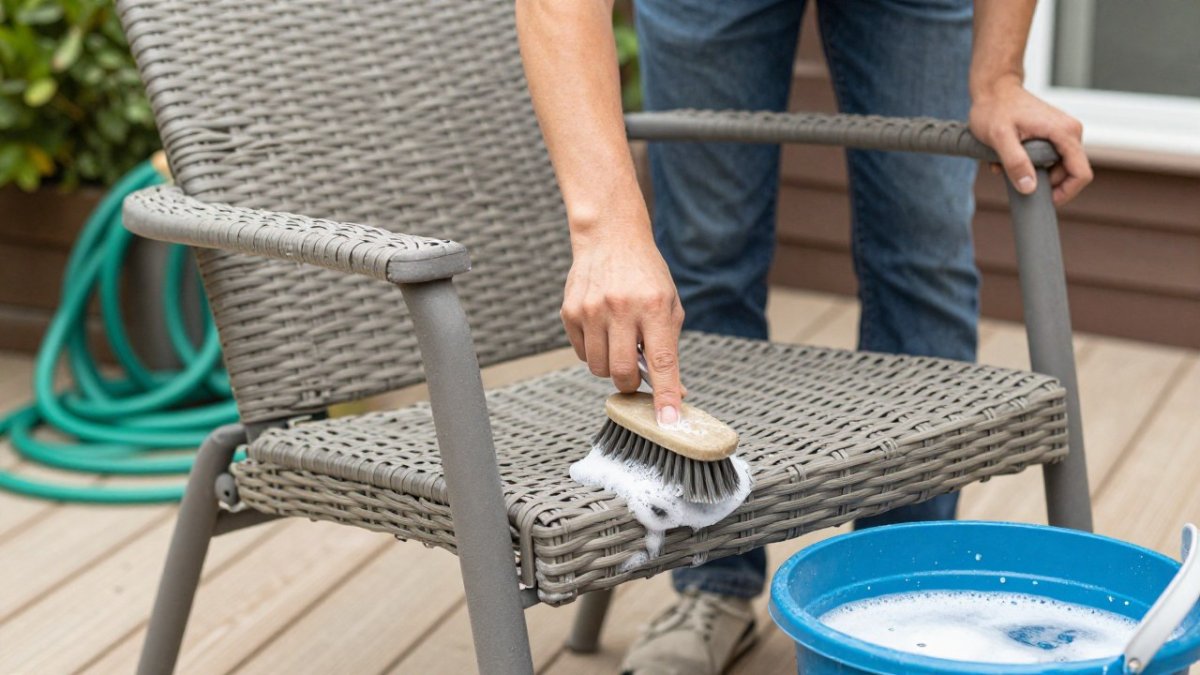
Dip a soft-bristle brush or sponge into the soapy water and scrub in gentle circles. Work in small sections, and rinse your brush often so you're not smearing dirt around. A soft cloth works well on flat plastic surfaces.
Scrubbing Woven Strands and Hard-to-Reach Crevices
Woven furniture hides dirt in the gaps between strands, and that's where mildew starts. An old toothbrush is the best tool for these tight spots. Dip it in soapy water and work along each strand, following the direction of the weave.
Watch out: scrubbing across the weave instead of along it can snag and fray the strands.
For deeper cleaning, apply the soapy water, let it sit for a few minutes, then scrub. Don't let soap dry on the surface. Rinse as you go.
Step 3: Rinse Thoroughly and Air Dry Your Patio Furniture
Rinse every surface with clean water from a garden hose on a gentle setting. Soap residue left behind attracts dust and can leave a dull film. Rinse twice if you used a heavier soap mix.
Then let the furniture air dry in the sun. Prop cushions and removable parts upright so water drains off. Avoid stacking pieces while wet, since trapped moisture invites mold.
Once everything is dry, a heavy duty patio furniture cover keeps the next round of pollen and rain off your clean set.

Finding the Best Cleaner for Plastic Outdoor Furniture
The best cleaner for plastic outdoor furniture is mild dish soap and warm water for routine washes, with baking soda for stains. You don't need specialty products. Most commercial cleaners are stronger than the surface needs, and some leave a sticky residue.
When you do buy a cleaner, check the label for:
- A pH-neutral formula
- No bleach or ammonia
- No abrasive grit
- A note that it's safe on resin or plastic
Test any new product on a hidden spot first. Let it sit, then check for fading or dulling before you use it on the whole piece.
How to Clean Plastic Patio Furniture With Baking Soda
Baking soda lifts stains and neutralizes odors without scratching the surface. Mix three parts baking soda with one part warm water to make a paste. Spread it on stains with a soft cloth or sponge.
Patio Furniture Covers Set 4 Piece,600D Heavy Duty Outdoor Furniture Covers →
Let the paste sit for 10 to 15 minutes. Scrub gently with a soft brush, then rinse with clean water and dry. For a whole-piece refresh, add a half cup of baking soda to a bucket of warm water and wash as usual.
Baking soda works well on:
- Scuff marks
- Food and drink stains
- Mildew residue
- Lingering odors
How to Remove Mildew From Outdoor Furniture
Mildew shows up as gray or black speckles, usually on shaded pieces that stay damp. The fix depends on how deep the mildew has grown into the surface, and on which material you are treating.
Start With the Mildest Treatment
Mix one part white vinegar with three parts water in a spray bottle. Spray the affected area, let it sit for 10 minutes, then scrub with a soft brush and rinse. Vinegar is safe on resin wicker, molded plastic, and poly lumber, and it handles light surface mildew without the risk of bleaching color out of the strands.
Watch out: chlorine bleach can yellow some plastics and damage woven strands over time, so test it first and keep it off colored pieces. Never mix bleach with vinegar or ammonia, the combination releases toxic gas.
Cleaner Compatibility at a Glance
Not every cleaner is safe on every synthetic surface. Use this as a starting point, and always check the manufacturer's care instructions before trying a new product.
-
Mild dish soap and water, safe on all three materials for routine washing.
-
White vinegar (diluted), safe on all three for light mildew and mineral film; rinse well.
-
Baking soda paste, safe on all three for scuff marks and food stains; mildly abrasive, so use a soft cloth.
-
Chlorine bleach, risky on colored plastics and woven strands; can yellow or weaken them. Avoid unless the manufacturer explicitly allows it.
-
Solvent-based cleaners, acetone, and paint thinner, can soften or melt some plastics and strip finishes. Do not use.
-
Abrasive pads and scouring powders, scratch molded plastic and fray woven strands. Do not use.
Patch-test any new product on a hidden spot, let it sit for the full contact time, then check for fading, dulling, or tackiness before using it on the whole piece.
After Treatment: Dry and Prevent
After treatment, dry the furniture in full sun. To help stop mildew from returning, cover pieces during wet months. How to protect patio furniture this winter explains how to guard against winter moisture and damage.
If mildew keeps coming back in the same spot, the problem is usually trapped moisture rather than the cleaner.
Not every cleaner is safe on every synthetic surface, so use this compatibility guide as a starting point.
| Cleaner | Safe on | Notes |
|---|---|---|
| Mild dish soap and water | All three materials | Routine washing |
| White vinegar (diluted) | All three materials | Light mildew and mineral film; rinse well |
| Baking soda paste | All three materials | Scuff marks and food stains; use a soft cloth |
| Chlorine bleach | Risky on colored plastics and woven strands | Can yellow or weaken them; avoid unless manufacturer allows |
| Solvent-based cleaners, acetone, paint thinner | None | Can soften or melt plastics and strip finishes |
| Abrasive pads and scouring powders | None | Scratch molded plastic and fray woven strands |
How to Clean Patio Furniture Cushions and Canvas
Cushions and canvas need a gentler touch than frames. Remove the covers if the label allows, and check the care tag first. Most outdoor fabrics handle a mild soap and water wash, but some need spot cleaning only. To understand which durable outdoor fabric for cushions is easy to maintain, see the comparison.
Steps for cushions and canvas:
- Brush off loose dirt with a soft brush.
- Mix mild soap with warm water.
- Sponge the fabric without soaking it through.
- Rinse with a cloth and clean water.
- Stand cushions upright to dry.
Never put outdoor cushions in a dryer. Heat can shrink fabric and break down the backing.
Frequently Asked Questions
Can you use Dawn dish soap to clean synthetic outdoor furniture?
Yes. A few drops of mild dish soap in a bucket of warm water is one of the safest cleaners for synthetic wicker, resin, and plastic frames. It lifts oils and grime without stripping the finish. Keep the mix weak, roughly a teaspoon per gallon, and rinse thoroughly afterward so no soap residue dries into the weave. Skip anything labeled abrasive, and never mix dish soap with bleach in the same bucket.
How do you remove mildew from resin wicker furniture?
Mix a mild soap solution with warm water and scrub the affected strands with a soft-bristle brush, working into the crevices where spores settle. For stubborn spots, a diluted white vinegar solution can help. Rinse with clean water and let the piece air dry in direct sun before putting cushions back on. Mildew returns when moisture stays trapped, so keep the furniture uncovered during drying and store it dry.
What is the best cleaner for plastic outdoor furniture?
For routine cleaning, mild dish soap and warm water handle most dirt on plastic patio furniture. For tougher buildup, a baking soda paste works well on scuffs and grime without scratching the surface. Avoid bleach-heavy or abrasive cleaners that dull the finish over time. Whatever you choose, test it on a hidden spot first, rinse completely, and let the piece air dry.
Can you pressure wash synthetic outdoor furniture?
It is safer to skip the pressure washer. High-pressure spray can force water into the weave, loosen strands, and strip protective finishes on resin and poly pieces. A garden hose with a gentle spray nozzle plus a soft brush does the job without surface damage. Save the pressure washer for concrete, not furniture.
Cleaning synthetic furniture takes an afternoon, but the payoff is a set that looks new season after season. If your current pieces are past saving, Backyard Comfort CO builds weather-ready furniture meant to last, with solid construction and free shipping on most orders within the continental U.S. Our 30-day return policy makes it easy to try a set in your space. Get started with Backyard Comfort CO and turn your patio into a retreat you'll keep for years.